

Menstrual Hygiene Day 2026: 500 Million Left Behind
Introduction: A Day That Should Not Need to Exist
Every 28th of May, the world pauses, not to celebrate, but to confront an inconvenient truth: that for hundreds of millions of women and girls, menstruation is not a private inconvenience but a public crisis of health, education, and dignity.
Menstrual Hygiene Day (MH Day), observed annually since 2014 and coordinated by WASH United in collaboration with UNICEF and partner organizations, was founded on a deceptively simple premise, that no person should be held back because they menstruate. Twelve years on, that premise remains unmet on a staggering scale.
In 2026, MH Day is observed under the global theme #PeriodFriendlyWorld, calling together governments, United Nations agencies, civil society organizations, researchers, and communities to strengthen political commitment, dismantle stigma, and build the infrastructure that makes dignified menstrual management possible for all. A landmark “Shared Agenda for Action on Menstrual Health and Hygiene” is being released for global public feedback this very day, a signal that 2026 may be a watershed year for policy.
But before we count the solutions, we must be honest about the problem. This journal does exactly that.
The Scale of the Crisis, What the Numbers Tell Us
The most cited figure in menstrual health advocacy is also the most alarming. According to the World Bank, at least 500 million women and girls currently lack access to menstrual products and adequate facilities for menstrual hygiene management (MHM). On any given day, over 800 million women worldwide are menstruating, meaning that on that same day, more than half of them may be managing their cycle without the resources to do so safely or with dignity.
The infrastructure deficit is vast. The World Bank reports that more than 1.25 billion women and girls lack access to private toilets, while 526 million have no toilet access at all, a foundational barrier to any meaningful menstrual hygiene intervention. Meanwhile, globally, 1 in 3 schools lacks basic hygiene bins for menstrual waste disposal, making school environments hostile to the most basic period management needs.
The reach and urgency of this problem is not diminishing. The collective reach of MH Day campaigns has grown from 20 million people in 2014 to 971 million in 2025, a near 200-fold increase in media coverage, yet the population in need remains largely unchanged.
Period Poverty Is Not Just a "Developing World" Problem
One of the most politically uncomfortable truths in menstrual health data is that period poverty is not confined to low-income nations. Peer-reviewed research published in Frontiers in Reproductive Health (Sacca et al., 2023) found that an estimated 16.9 million menstruating women in the United States live in poverty, two-thirds of whom are low-income and food-insecure women who cannot reliably afford pads, tampons, or other basic menstrual products.
In the same country, 1 in 4 teens and 1 in 3 adults struggle to afford period products, with the burden falling disproportionately on teenagers of colour and lower-income households (UN Women). A national study among U.S. college students found that 14.2% of respondents had experienced period poverty in the preceding year, while 10% experienced it every month, with those reporting monthly period poverty facing a significantly higher likelihood of moderate-to-severe depression symptoms.
The economic mechanism is well-documented: the so-called “pink tax”, higher prices on products marketed to women, makes what is a medical necessity into a financial burden. The data makes an unambiguous case that period poverty is a public health emergency that transcends geography and income bracket.
The Education Penalty, How Periods Push Girls Out of School
Perhaps no data set better illustrates the developmental consequences of inadequate menstrual hygiene infrastructure than school attendance figures.
A 2025 study published in the Pan African Medical Journal (Adane et al., 2025) examined schoolgirls in Northwest Ethiopia and found that more than half, 55.5%, missed school days due to menstruation and related factors, averaging 2.08 days per month. Across 10 months of schooling, that amounts to over 20 days of lost education per girl, per year.
In sub-Saharan Africa, the structural causes are clear: only 47% of schools have access to adequate sanitation facilities, and fewer offer private, safe spaces for girls to manage menstruation effectively, according to a 2025 scoping review published in Frontiers in Reproductive Health (Tshivule et al., 2025). The review, drawing on evidence across rural African school settings, identifies resource limitations, both the cost and availability of menstrual hygiene products and WASH infrastructure, as primary barriers to school participation.
Globally, a UNESCO report documented that approximately 10% of menstruating youth miss school during their period due to lack of access to menstrual health management resources. In parts of sub-Saharan Africa, that figure climbs to 31% of girls missing school during their periods (GFoundation, 2026), creating a direct pathway from period poverty to educational inequality and, ultimately, to lifetime economic disadvantage.
In India, the scale is even starker: the Smile Foundation (2026), citing data from the National Family Health Survey (NFHS-5), reports that an estimated 23 million girls drop out of school annually, with inadequate sanitation and menstrual hygiene facilities among the contributing factors. This makes menstrual health not merely a health issue but an education and economic development issue of the first order.
The good news, and it is meaningful, is that evidence suggests the problem is solvable. Systematic reviews indicate that school-based interventions can improve attendance rates by 5–10% among adolescent girls during their menstrual periods when menstrual hygiene products and appropriate facilities are provided.
Stigma, The Root Cause That Underpins Everything
Every statistic cited above sits downstream of a single, persistent force: stigma.
The official MH Day 2026 messaging is explicit on this point: the persisting taboos and social prejudice that treat periods as something shameful or “to be hidden” are the root cause that underpins all other challenges. If periods cannot be openly discussed, schools cannot request better facilities. Girls cannot ask for help. Policymakers cannot allocate budget lines. Researchers cannot gather data.
UNICEF’s global menstrual hygiene framework identifies gender inequality, cultural taboos, and discriminatory social norms as forces that compound poverty and infrastructure deficits, rendering entire populations unable to manage their menstrual cycles in a dignified, healthy way. Transgender men and non-binary persons face additional layers of discrimination, depriving them of access to the materials and facilities they need.
The social isolation dimension carries measurable mental health consequences. Research published in Frontiers in Reproductive Health (Sacca et al., 2023) directly links period poverty to urinary tract infections and mental health deterioration, two outcomes that confirm what advocates have long argued: stigma is not a soft issue. It has hard clinical consequences.
Reproductive Age, Reproductive Rights, A Population-Level Lens
Approximately 52% of the global female population, roughly 26% of all people on Earth, is of reproductive age and will menstruate monthly for between 2 and 7 days (UNICEF; House et al., 2012). This is published in Health Marketing Quarterly (Vol. 41, No. 3, 2024) by researchers at the University of the Witwatersrand and the University of Cape Town.
That figure reframes menstrual hygiene not as a niche women’s issue but as a population-level public health mandate. Access to safe menstrual management is not a privilege, it is, by any reasonable standard, a human right. The WHO/UNICEF Joint Monitoring Programme definition is precise: dignified menstrual hygiene management requires clean materials, privacy, water and soap for washing, safe disposal facilities, and basic knowledge of the menstrual cycle. By that standard, hundreds of millions of people are being denied a basic human right every single month.
Regional Snapshot, Africa and the Path Forward
Africa sits at the centre of the global menstrual hygiene conversation, not because the problem is uniquely African, but because the data is particularly revealing of the structural solutions required.
Ghana offers a microcosm. On MH Day 2026, UNICEF, commemorating the day under the national theme “Together for a Period-Friendly Ghana”, publicly welcomed the government’s Free Sanitary Pads Initiative aimed at reaching schoolgirls nationwide, while calling for scaling up investments in three priority areas: infrastructure gaps, tracking systems for data collection, and safe hygiene practice promotion. The dual call, celebrate progress, demand more, reflects the honest state of the field.
Peer-reviewed evidence from the BMC Public Health journal (Agbenu et al., 2025) and from the University of Ghana School of Public Health reinforces the point: menstrual hygiene management remains a public health issue across sub-Saharan Africa, compounded by knowledge deficits, product access barriers, and inadequate school infrastructure. Research published in the International Journal of Environmental Research and Public Health (Rossouw & Ross, 2021), drawing on Performance Monitoring and Accountability 2020 data across eight low- and middle-income countries including Ghana, Kenya, Ethiopia, and Nigeria, found deep socioeconomic inequalities in MHM access, with rural, lower-income women consistently least served.
A 2021 study published in Sex, Reproductive and Health Matters (Hennegan et al.) found measurable school and work absenteeism due to menstruation in three West African countries, providing some of the most granular regional evidence of the education-period poverty link.
The 2026 Shared Agenda, What Must Change
MH Day 2026 is not merely commemorative. A “Shared Agenda for Action on Menstrual Health and Hygiene”, a multi-stakeholder framework drawing together governments, UN agencies, civil society, researchers, and communities, is being released for global public feedback on this day. It represents a structural escalation: from awareness to accountability.
The evidence base demands action on five fronts:
- Universal Product Access From free sanitary pads in schools (as in Ghana’s national initiative) to elimination of the “pink tax” on menstrual products, governments must treat period products as health necessities, not consumer goods.
- WASH Infrastructure Private, clean toilets with disposal facilities in every school, health facility, shelter, and public space. The data is unambiguous: infrastructure is the single most actionable lever for changing school attendance outcomes.
- Comprehensive Education Menstrual health education for girls, boys, teachers, and community leaders, delivered early, delivered accurately, and delivered without shame. Knowledge is the precondition for all other change.
- Data Collection and Tracking As UNICEF noted in Ghana, stronger data collection systems are critical. You cannot fix what you cannot measure. Investment in nationally representative MHM data is an investment in the evidence base for every subsequent intervention.
- Breaking Stigma, In Policy, Media, and Daily Life The #PeriodFriendlyWorld campaign is, at its core, a call to shift culture. Legislation, media representation, open conversation in homes and classrooms, and political leadership that names menstruation without euphemism, these are the conditions under which real change becomes possible.
The Numbers Are Not Abstract
On this Menstrual Hygiene Day 2026, the numbers deserve to be stated plainly: 500 million women without adequate products or facilities. 31% of girls in parts of Africa missing school during their periods. 23 million girls dropping out of school in India annually, in part because of inadequate menstrual hygiene infrastructure. 1 in 4 American teenagers who cannot afford a pad.
These are not abstractions. Each figure represents a girl who sat through class in silence, a woman who chose between food and period products, a student who fell behind and never caught up.
The 2026 theme, #PeriodFriendlyWorld, is not aspirational branding. It is a policy demand. A world that is period-friendly is one where menstruation does not determine educational outcomes, economic participation, or physical and mental health. The data shows we are not there yet. The data also shows exactly what we need to do.
References
- WASH United / UN-Water. Menstrual Hygiene Day 2026, #PeriodFriendlyWorld. UN-Water, May 2026. https://www.unwater.org/news/menstrual-hygiene-day-28-may-2026
- World Bank. Menstrual Health and Hygiene. World Bank Brief, 2024. https://www.worldbank.org/en/topic/water/brief/menstrual-health-and-hygiene
- UNICEF. Menstrual Hygiene. UNICEF WASH Programme. https://www.unicef.org/wash/menstrual-hygiene
- UN Women. Period Poverty: Why Millions of Girls and Women Cannot Afford Their Periods. UN Women Explainer. https://www.unwomen.org/en/articles/explainer/period-poverty
- Sacca, L., Markham, C.M., Gupta, J., & Peskin, M. (2023). Editorial: Period poverty. Frontiers in Reproductive Health. DOI: 10.3389/frph.2023.1140981
- Adane, Y. et al. (2025). Effect of menstruation on school attendance of girls along with water, sanitation, and hygiene services in Northwest Ethiopia. Pan African Medical Journal, 50:28. DOI: 10.11604/pamj.2025.50.28.45413
- Tshivule, M.Z., Rasweswe, M.M., Mothiba, T.M. & Bopape, M.A. (2025). Factors influencing menstrual hygiene knowledge, attitudes, and practices among adolescent girls in African rural schools: scoping review. Frontiers in Reproductive Health, 7:1553101. DOI: 10.3389/frph.2025.1553101
- Rossouw, L. & Ross, H. (2021). Understanding Period Poverty: Socio-Economic Inequalities in Menstrual Hygiene Management in Eight Low- and Middle-Income Countries. International Journal of Environmental Research and Public Health, 18(5), 2571. DOI: 10.3390/ijerph18052571
- Agbenu, I.A. & Otoo, D.D. (2025). Menstrual hygiene knowledge and practices among female senior high school students in the New Juaben North Municipality of Ghana. BMC Public Health. DOI: 10.1186/s12889-025-22836-8
- Health Marketing Quarterly (2024). Advancing Women’s Health Equity and Empowerment: Exploring Period Poverty and Menstrual Hygiene (Vol. 41, No. 3). DOI: 10.1080/07359683.2024.2403244
- Smile Foundation India. (2026). Menstrual Hygiene Day 2026: The Walk Towards Reducing Risks. https://www.smilefoundationindia.org/blog/menstrual-hygiene-day-the-walk-towards-reducing-risks/
- UNICEF Ghana / GBC Ghana Online. (2026). UNICEF Calls for Accelerated Action and Stronger Data Collection Systems as Ghana Marks Menstrual Hygiene Day. https://www.gbcghanaonline.com/news/unicef-calls-for-accelerated-action
- GFoundation. (2026). Menstrual Hygiene Day 2026: Why Period Poverty Still Matters. https://gfoundationus.org/2026/05/06/mhday-campaign/
- MH Day Media. (2026). Five Things You Need to Know About MH Day 2026. https://www.menstrualhygieneday.org/media
Share This Post :
- Our News
Changing Lives: Our Latest Stories
Discover inspiring stories of impact, community outreach, and real lives transformed through our ongoing initiatives and compassionate actions.
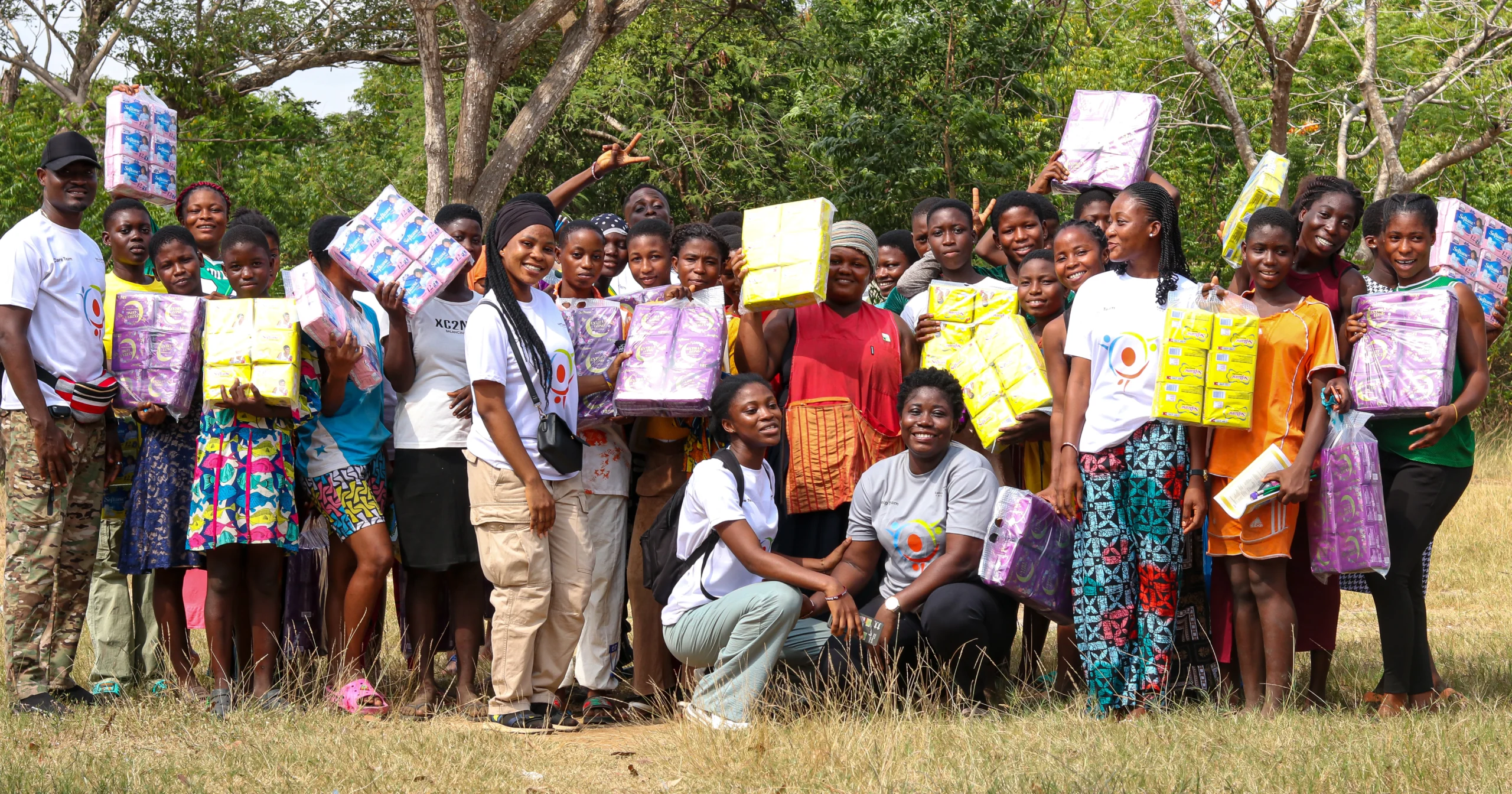
Menstrual Hygiene Day 2026: 500 Million Left Behind
Introduction: A Day That Should Not Need to Exist Every...
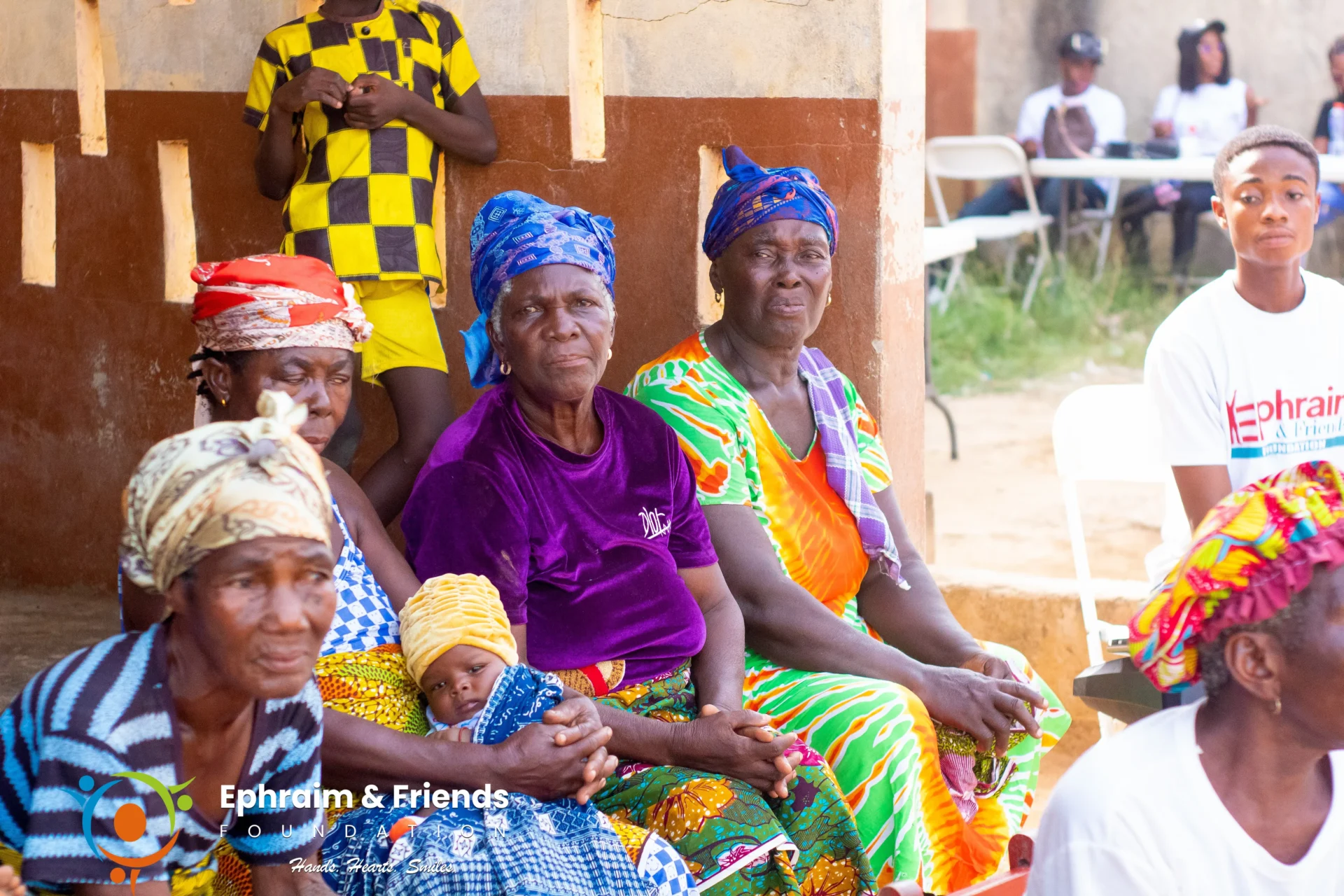
Alorkpem Island Community Sees Major Health and Education Boost in 2023
In 2023, Ephraim & Friends Foundation carried out a high-impact...
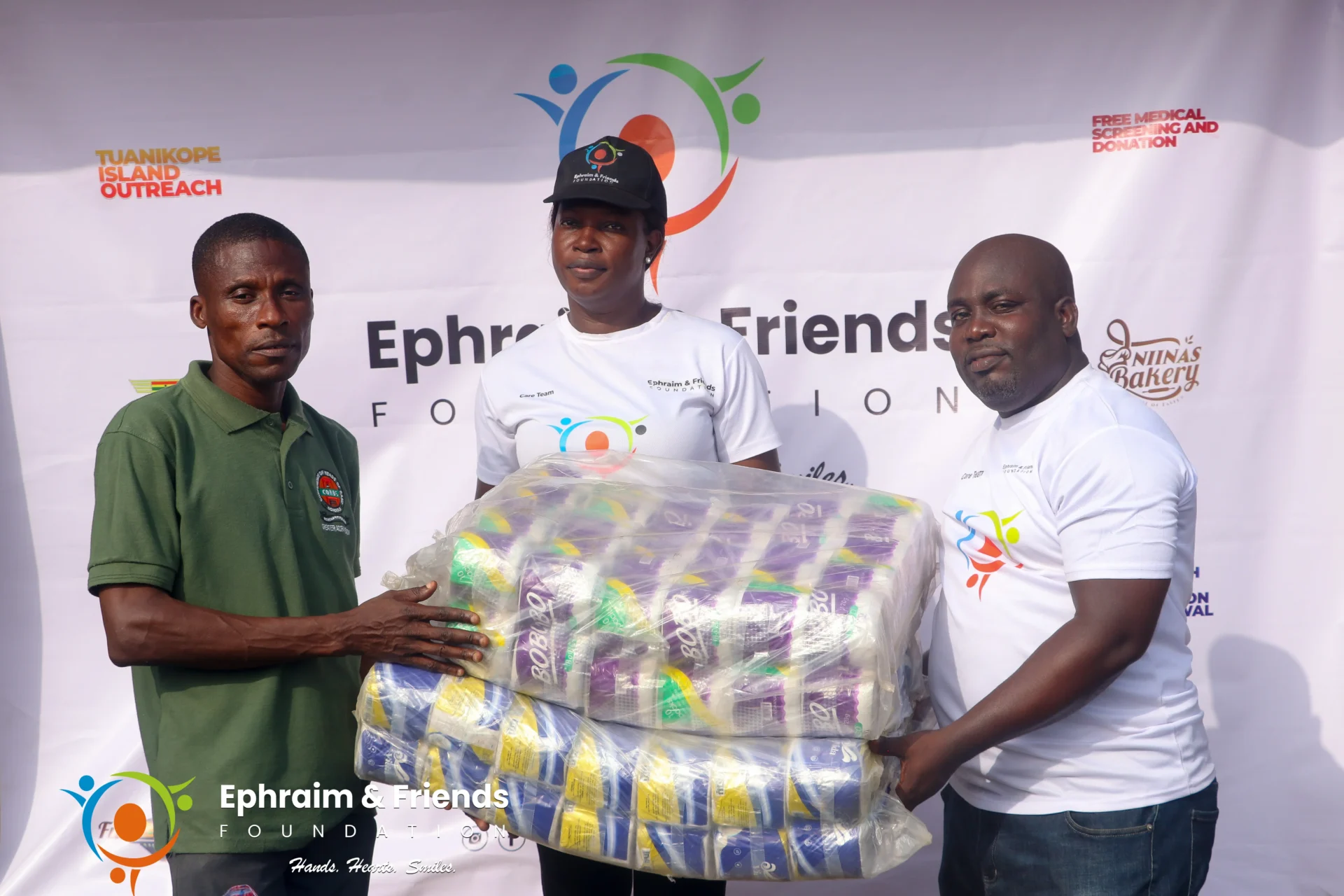
Aflive Island Residents Receive Education and Welfare Support in 2022 Outreach
Residents of Aflive Island benefited from a wide-ranging humanitarian outreach...
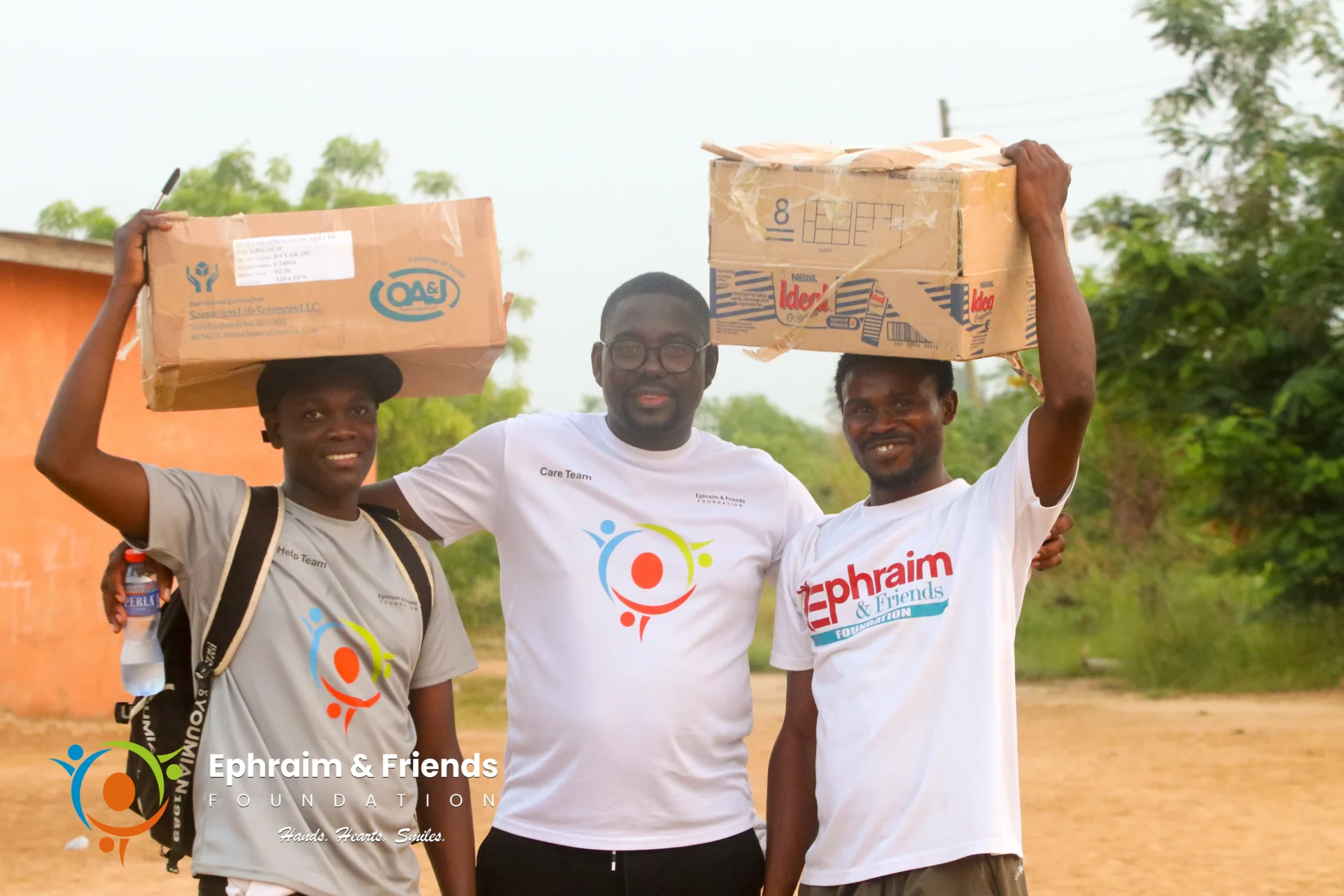
Azizakpey Island Residents Benefit From Community Outreach Initiative in 2021
Residents of Azizakpey Island received essential welfare and educational support...